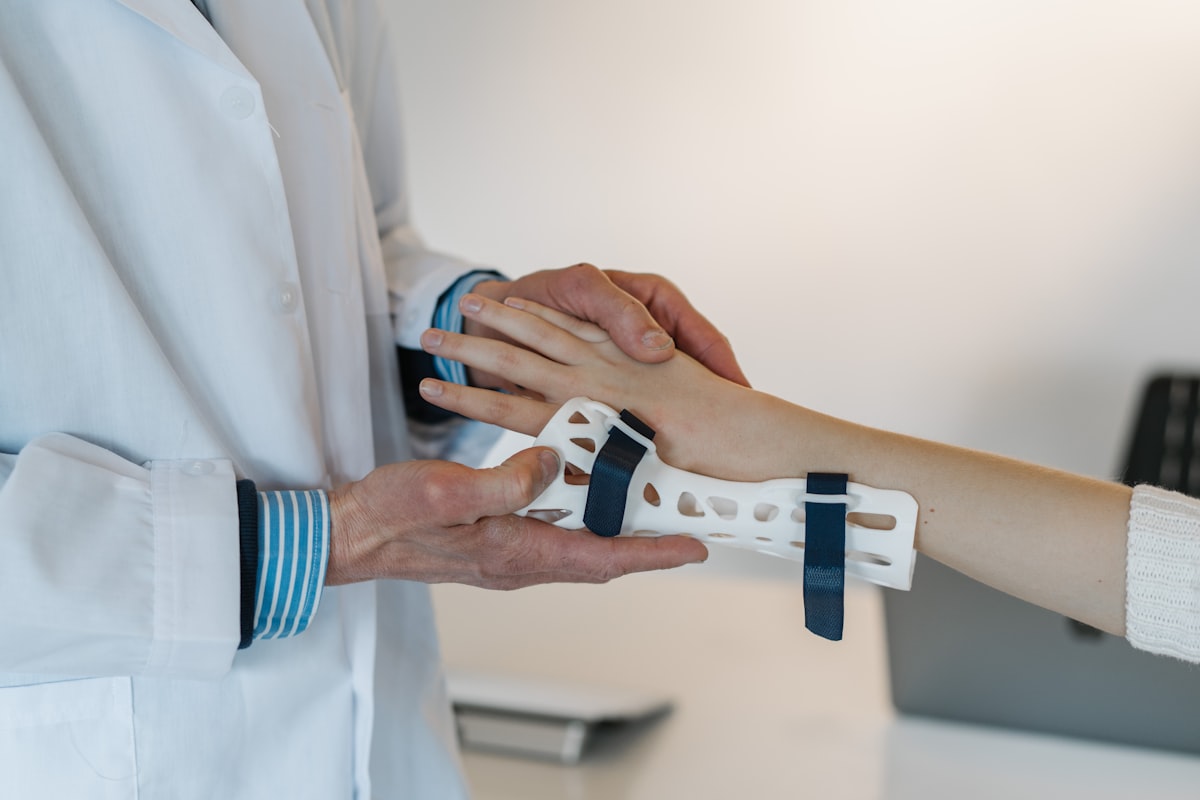
Beyond Pain Management: Actual Repair
The conventional approach to joint pain and tissue injury is pain management — NSAIDs, corticosteroid injections, and eventually surgery. These approaches manage symptoms but rarely address the underlying tissue damage. In many cases, they actually impair healing: NSAIDs inhibit the inflammatory response that initiates repair, and corticosteroids weaken tendons and cartilage over time.
Peptide therapy takes a fundamentally different approach: instead of masking pain, it accelerates the body's natural repair mechanisms to actually heal damaged tissue.
The Repair Peptide Arsenal
BPC-157 (Body Protection Compound)
BPC-157 is arguably the most versatile healing peptide available. Originally isolated from human gastric juice, it promotes healing of virtually every tissue type studied — tendons, ligaments, muscles, bones, nerves, and gut tissue. Its mechanisms include:
- Promoting angiogenesis (new blood vessel formation) at injury sites
- Upregulating growth factor receptors
- Reducing inflammation through multiple pathways
- Protecting against NSAID-induced gut damage
- Promoting nitric oxide-mediated healing
Protocol: 250-500 mcg/day subcutaneous (near injury site for local issues, or abdomen for systemic effects). Can also be taken orally (500 mcg) for gut-related issues.
TB-500 (Thymosin Beta-4)
TB-500 promotes tissue repair through a different mechanism than BPC-157, making them excellent in combination. TB-500 upregulates actin, a protein critical for cell migration and wound healing. It reduces inflammation, promotes new blood vessel growth, and has been shown to regenerate heart tissue after injury.
Protocol: 750 mcg subcutaneous, 2-3 times per week during active healing. Can be reduced to 1-2 times per week for maintenance.
GHK-Cu (Copper Peptide)
GHK-Cu is a naturally occurring peptide that declines significantly with age. It stimulates collagen synthesis, promotes wound healing, has anti-inflammatory effects, and supports tissue remodeling. It's particularly effective for skin, connective tissue, and joint health.
Protocol: 1-2 mg subcutaneous daily, or topical application for skin-specific benefits
Understanding TB-500: Fragment 17-23 vs. Full 43-Amino Acid Sequence
When sourcing TB-500, it is important to understand that two distinct forms exist. TB-500 Fragment 17-23 (sequence: LKKTETQ) is a 7-amino-acid peptide containing only the active domain responsible for actin binding and cell migration. It is highly targeted, penetrates tissue easily due to its small size, and is often more affordable. It is best suited for acute, localized injuries like muscle tears or tendon strains.
Thymosin Beta-4 (Full 43-Amino Acid Sequence) is the complete naturally occurring peptide. It contains the Fragment 17-23 region but also includes additional domains that provide broader biological activity — stronger systemic anti-inflammatory effects, enhanced angiogenesis, cardiac tissue protection, and hair regrowth stimulation. The full sequence is preferred for systemic healing, chronic inflammation, and comprehensive repair protocols.
For most tissue repair applications, the full 43-amino-acid sequence offers superior results due to its wider range of healing mechanisms. The fragment is a cost-effective alternative when targeting a specific acute injury.
Pentadecapeptide (BPC-157) + TB-500 Combination
The combination of BPC-157 and TB-500 is considered the gold standard for tissue repair in the peptide community. They work through complementary mechanisms — BPC-157 primarily promotes angiogenesis and growth factor signaling, while TB-500 promotes cell migration and tissue remodeling. Together, they create a comprehensive healing environment.
Supporting Repair with Low-Dose GLP-1
Low-dose GLP-1 agonists like Tirzepatide and Retatrutide support tissue repair indirectly through several mechanisms:
- Inflammation reduction — chronic inflammation impairs healing. GLP-1 agonists reduce systemic inflammatory markers, creating a better environment for tissue repair
- Improved nutrient delivery — better metabolic function means better blood flow and nutrient delivery to healing tissues
- Blood sugar stability — elevated blood sugar impairs wound healing and collagen formation. Optimized glucose levels support faster, more complete repair
Repair Protocol Examples
Acute Injury: BPC-157 (500 mcg/day) + TB-500 (750 mcg, 3x/week) for 4-8 weeks
Chronic Joint Issues: BPC-157 (250 mcg/day) + GHK-Cu (1 mg/day) + low-dose GLP-1 for inflammation management, ongoing
Post-Surgery Recovery: BPC-157 (500 mcg/day) + TB-500 (750 mcg, 3x/week) + CJC-1295/Ipamorelin (for enhanced growth hormone during sleep) for 6-12 weeks
Comprehensive Joint Health: All repair peptides + adequate collagen/protein intake + vitamin C (for collagen synthesis) + low-dose GLP-1 for systemic inflammation reduction